

News
Sharing money instead of kilowatts? Reflections from Latvia and Lithuania
By Annika Emilie Kullamäe, Tal Tech
Practitioners in Latvia and Lithuania have been taking matters into their own hands. Be it with aligning ground-level practice to legislative frameworks or building communities with measures currently available to them. Latvia's energy legislation, amended back in January 2023, technically allows neighbours to share solar electricity, though the technical rules to actually do so were not adopted until the end of 2024. However, getting a household-to-household sharing contract through an electricity trader in the country turned out to be a tangled piece of yarn. The law existed, but the mechanisms to untangle the knots at practice level did not. Instead of waiting, the founder of Pirmā Energokopiena, Latvia’s first registered energy community, established in March 2025, found some leeway in proposing a possible fix to create a middleman organisation that pools together households electricity use, handles billing between neighbours, and negotiates with the trader as one combined customer. For now, the idea remains as a blueprint since sharing between neighbours would need infrastructure they do not have yet.
Two countries, the same gap
The same gap presents itself in two different shapes. Both countries share a version of a "rules on paper, less route in practice" paradox. In Latvia, the legal right to share energy exists, but there is no functioning way to implement it, so communities end up doing the next best thing by sharing money, not kilowatt-hours, splitting bills and costs manually rather than actually trading energy. Behind this lies a decade of advocacy work built through cross-border networks like Bankwatch and Interreg. A €9.2 million grant, allocated through the Modernisation Fund specifically for registered energy communities and a separate pot for multi-apartment buildings, is a real boost, but one that still has to be built on top of a market that does not yet know how to serve them.
In Lithuania, the missing piece is the incentive on how to translate paperwork into practice. Lithuania's representative described that the country has defined both RECs and CECs in law and registered a considerable number of energy communities. Yet most of them still hold a place in legislative space rather than in actual practice. A national programme close to €200 million in grants and subsidised loans to municipality-led projects aims to change that. But there is a more immediate obstacle in that becoming an individual prosumer is simply faster and easier than organising collectively. One in eleven Lithuanian electricity consumers is already a prosumer, and net-metering coupled with personal incentives quietly outcompetes the case for doing it communally.
Two countries with two very different bottlenecks. Both recognise that transposing EU regulation is necessary, but nowhere near sufficient in their respective practices.
Life COMET, three steps towards a path to shared knowledge
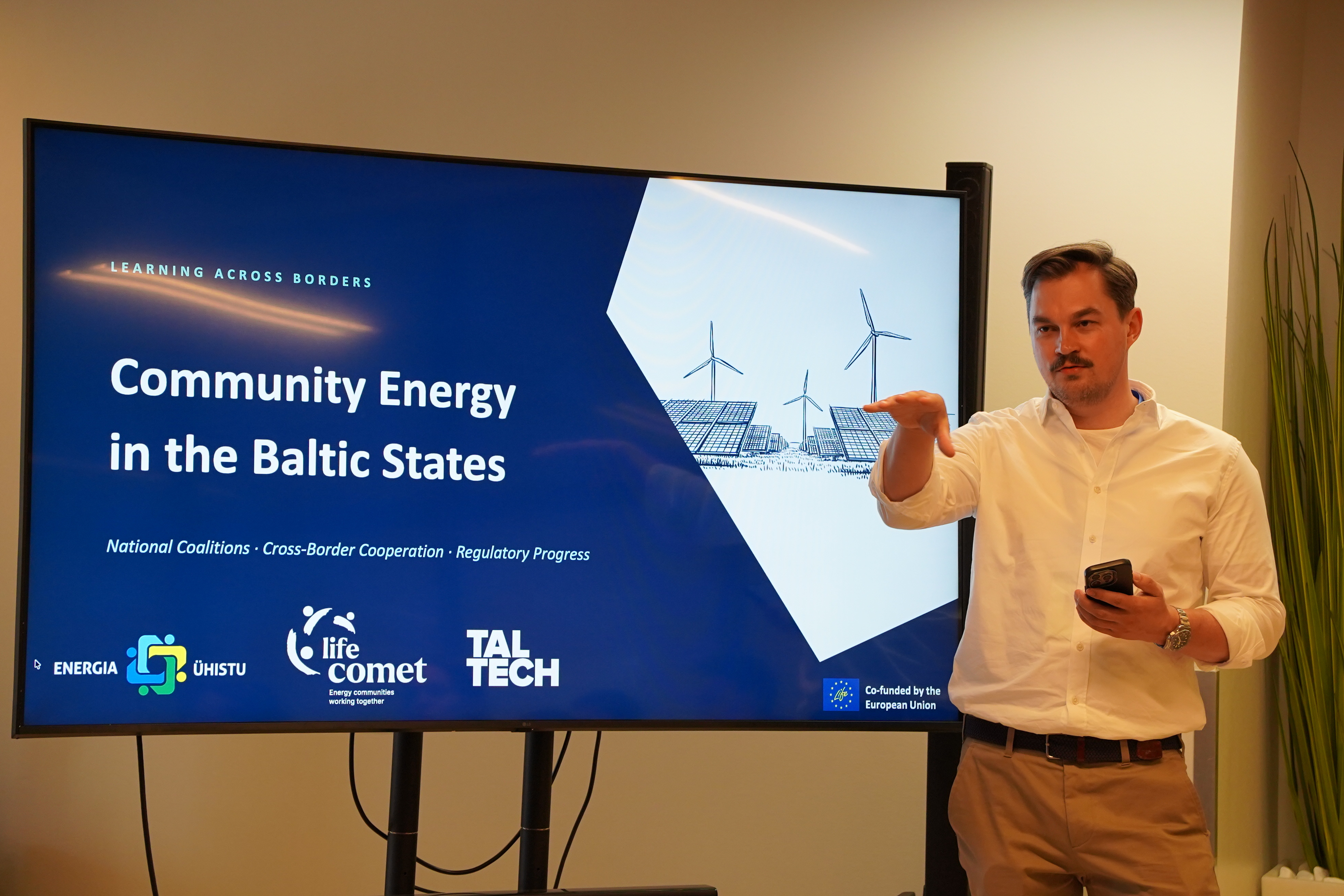
The Baltic countries' representatives shared their experiences across three capacity-building workshops.
The first was a simple online round of introductions between Latvian, Lithuanian, and Estonian experts. Even in the early stages, the contrast between experiences, despite being geographically close, stood out. The Lithuanian representative noted that with few active stakeholders in the space, a national coalition was not a consideration they were actively pursuing. His Latvian colleagues saw more ground for optimism with real interest, a few engaged institutions, and curiosity from the national energy provider, although needing a better structure to hold all of it together. Despite being in geographical proximity, everyone agreed that all three countries should actively work towards more deliberate collaboration.
The second online session in March is where the focus narrowed into specifics. Estonia's representative traced her experience back to 2014, when a mentor programme for energy cooperatives was first established, but was stalled and never quite received the elaborate support it needed. More than a decade later, the space has shifted: community energy was formally written into Estonia's Energy Economy Development Plan 2035, and a national coalition now brings together energy agencies, ministries, municipalities, etc. One concrete result in motion is the largest biogas plant in the Baltics, in Tahula village, located on the island of Saaremaa. However, it is still worth mentioning that the underlying imbalance has not disappeared. Smaller-scale community energy initiatives still remain in the outskirts of the political and financial support given to large-scale wind and solar projects. Latvia and Lithuania, meanwhile, pointed out their own gaps, creating space for the conversation to stop being about potential and to start being about specific structural reasons why the progress is stalling.
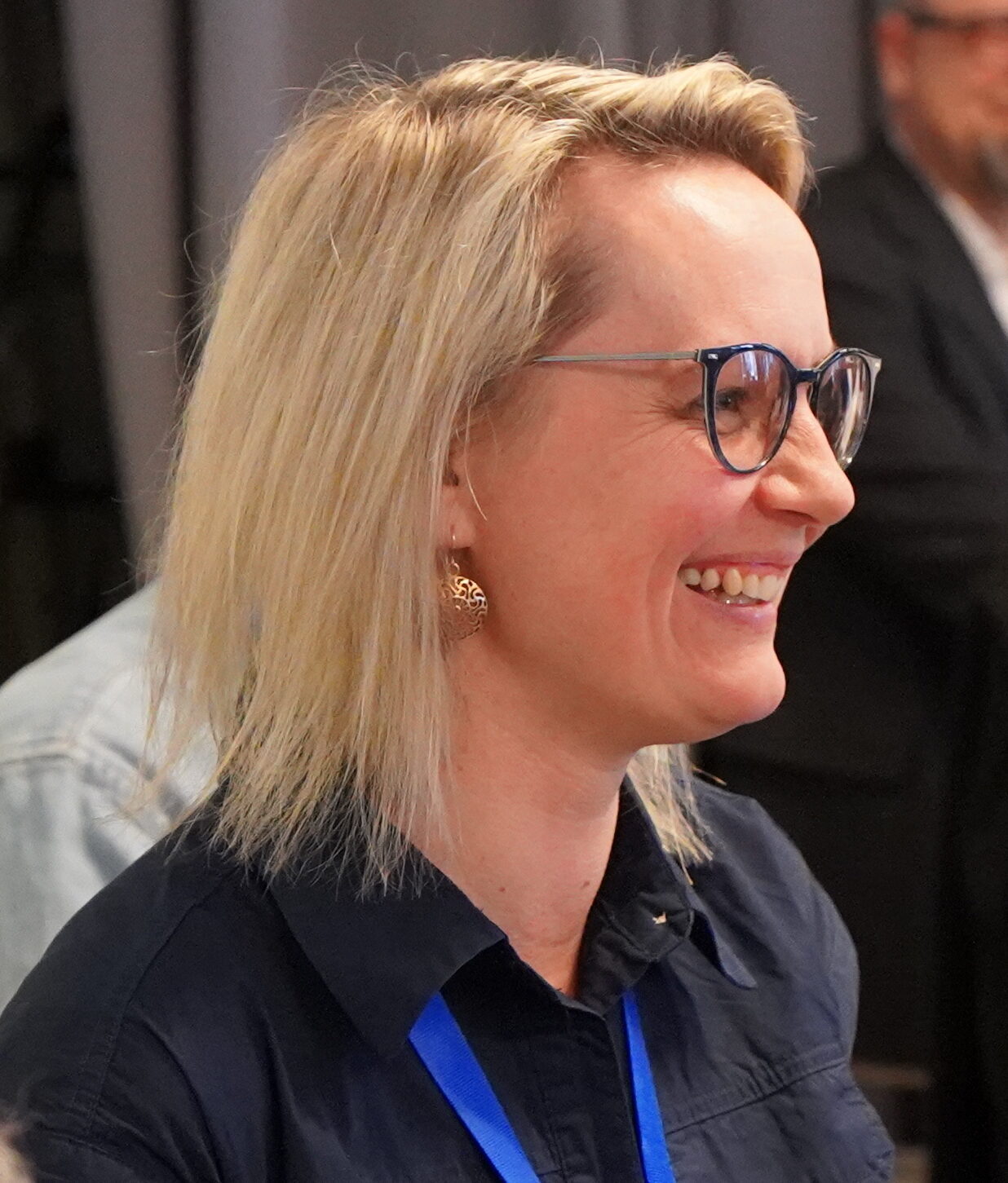
In May, at the European Energy Communities Forum in Jūrmala, the states of each Baltic country were presented alongside a representative from Greece's Desmi coalition and Electra Energy Cooperative that is active across the Western Balkans. The latter provided insights that have emerged through long and sustained experience in the field. The message was straightforward and useful: a coalition succeeds or fails less on regulations rather than on trust and relationships between people, and whether members feel the ownership of building the energy community collectively.
Different starting points, a shared goal
Latvia, Lithuania, and Estonia are not at the same point in this, and they did not get here the same way. Latvia already has a working proposal for the market side, even if no trader in the country has actually agreed to it yet. Lithuania has the legal groundwork done, but the knowledge of how to use it still sits with a handful of people. Estonia has spent over a decade building the institutions and coalition the other two are only just starting to think about.
None of that solves anyone else's problem directly. Latvia's workaround does not help Lithuania compete with its own prosumers, and Lithuania's grant money, in return, does not get Latvia a trader willing to sign a household contract. But it is roughly what the Greek and Western Balkan delegates kept coming back to in Jūrmala: none of this holds together because of the regulation. It holds together, when it does, because people trust each other enough to build something collectively instead of alone. Three countries at three different stages of the same slow process, comparing notes because none of them are far enough along yet to do it without each other.